Digital Signature: What It Is, How It Works, and When It Is Mandatory in Italy
Digital signature is one of the key tools of administrative digitization in Italy. Used by professionals, companies, and the Public Administration, it allows signing documents with full legal validity without using paper. In this guide, we explain what a digital signature is, how it works, when it is mandatory, and why it represents a crucial step for those who work and operate online.
Autore:Anna Bruno |
Pubblicato il: 16 January 2026 |
Categoria:Digital |
Tag:
Digital signature is one of the fundamental tools of digital transformation in Italy. More and more professionals, companies, and citizens are using it to sign official documents without resorting to paper, with full legal value. In this article, we will see what digital signature is, how it works, when it is mandatory, and how it fits into the broader process of administrative digitalization.
What digital signature is and why it has legal value
The digital signature is a special type of qualified electronic signature that guarantees the authenticity of the signer, the integrity of the document, and non-repudiation of the signature. In Italy, it has the same legal value as a handwritten signature on paper, provided it is issued by an accredited certifier.
Unlike a scanned signature or a simple electronic signature, the digital signature uses advanced cryptographic systems that allow one to verify the identity of the signer with certainty and to ascertain that the document has not been altered after signing.
How digital signature works
The functioning of the digital signature is based on a public and private key cryptography system. Each holder has:
a private key, used to sign documents;
a public key, used to verify the validity of the signature.
When a document is digitally signed, the system generates a unique fingerprint of the file that is associated with the signer’s identity. Any subsequent modification to the document would invalidate the signature.
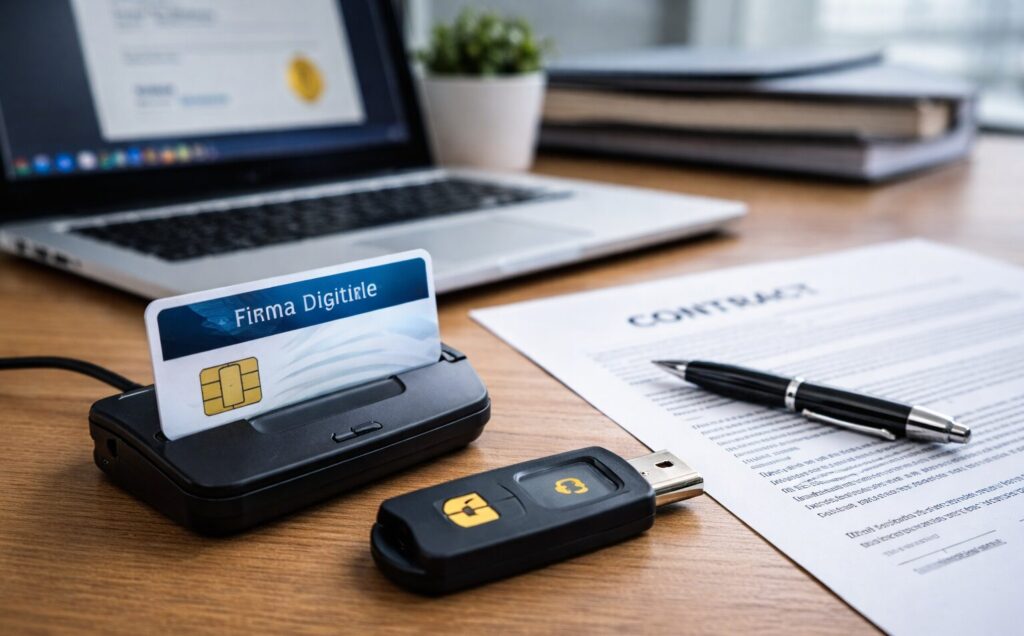
The digital signature can be applied through:
smart card or USB token;
remote digital signature;
certified software or online platforms.
When digital signature is mandatory in Italy
In the Italian regulatory context, the digital signature is mandatory in numerous cases, particularly in dealings with Public Administration. Among the most common situations are:
participation in public tenders and competitions;
filing of corporate deeds;
official communications with public entities and chambers of commerce;
sending documents through institutional telematic channels.
In other contexts, it is not strictly mandatory but is strongly recommended to ensure legal validity, security, and traceability of documents.
Digital signature and electronic invoicing: the connection
Digital signature is closely linked to electronic invoicing, which represents one of the pillars of fiscal digitalization in Italy. Although not all electronic invoices require a digital signature, there are specific contexts in which it is necessary or recommended. Electronic invoicing involves creating documents in XML format and sending them through the Interchange System. To explore in detail how this system works, you can consult our complete guide to electronic invoicing.
Digital signature and electronic invoicing together allow a fully digital management of fiscal documents, reducing errors, processing times, and operating costs.
Difference between digital signature and other electronic signatures
It is important to distinguish between the different types of electronic signatures:
simple electronic signature, which does not always guarantee legal value;
advanced electronic signature, used for example in banking contracts;
digital signature, which represents the highest level of security and legal validity.
In the Italian landscape, the digital signature is the one that offers the greatest guarantees in legal and security terms.
The advantages of digital signature for professionals and companies
The adoption of the digital signature entails numerous advantages:
elimination of paper and cost reduction;
possibility to sign documents remotely;
greater security against forgery and tampering;
reduction of bureaucratic times;
compliance with Italian and European regulations.
For companies and freelancers, it means working more efficiently and structured, integrating the digital signature with other tools such as PEC, electronic invoicing and digital archiving.
Digital signature and digitization of administrative processes
The digital signature is not an isolated tool, but part of a broader ecosystem including compliant storage, digital archiving, PEC and electronic invoicing. Together, these tools allow a modern and compliant management of documents, increasingly necessary in the Italian regulatory context. Understanding and correctly using the digital signature therefore means taking a concrete step towards a more efficient, secure and sustainable management of administrative activities.
Frequently asked questions about digital signature
Does the digital signature have legal value in Italy?
Yes, the digital signature has full legal value in Italy and is equated to the handwritten signature on paper. It is recognized by Italian and European regulations, provided it is issued by an accredited certifier.
Are digital signature and electronic signature the same thing?
No. The digital signature is a form of qualified electronic signature, with the highest level of security and legal validity. Simple or advanced electronic signatures do not always guarantee the same legal value.
When is digital signature mandatory?
Digital signature is mandatory in many relations with the Public Administration, such as calls for tenders, public bids, filing of corporate acts and official communications with public bodies and chambers of commerce.
Is digital signature required for electronic invoicing?
Not always. Electronic invoicing requires sending invoices through the Sistema di Interscambio, but in some specific contexts digital signature is required or recommended. For more details, consult the guide to electronic invoicing.
Can a document be digitally signed remotely?
Yes, it is possible to digitally sign documents remotely through remote digital signature services, without the use of smart cards or physical tokens, using certified software and platforms.
Is digital signature secure?
Yes, digital signature is highly secure because it uses advanced cryptographic systems that guarantee the signer’s identity and the integrity of the document, preventing unauthorized modifications.
How long does a digital signature last?
The validity of the digital signature depends on the certificate used, which usually has a limited duration and must be periodically renewed with the certifier.
Digital signature and document preservation: what you need to know?
Digitally signed documents must be preserved according to the rules of compliant digital preservation to ensure their legal validity and integrity over time.
Per fornire le migliori esperienze, utilizziamo tecnologie come i cookie per memorizzare e/o accedere alle informazioni del dispositivo. Il consenso a queste tecnologie ci permetterà di elaborare dati come il comportamento di navigazione o ID unici su questo sito. Non acconsentire o ritirare il consenso può influire negativamente su alcune caratteristiche e funzioni.
Funzionale
Always active
L'archiviazione tecnica o l'accesso sono strettamente necessari al fine legittimo di consentire l'uso di un servizio specifico esplicitamente richiesto dall'abbonato o dall'utente, o al solo scopo di effettuare la trasmissione di una comunicazione su una rete di comunicazione elettronica.
Preferenze
L'archiviazione tecnica o l'accesso sono necessari per lo scopo legittimo di memorizzare le preferenze che non sono richieste dall'abbonato o dall'utente.
Statistiche
L'archiviazione tecnica o l'accesso che viene utilizzato esclusivamente per scopi statistici.L'archiviazione tecnica o l'accesso che viene utilizzato esclusivamente per scopi statistici anonimi. Senza un mandato di comparizione, una conformità volontaria da parte del vostro Fornitore di Servizi Internet, o ulteriori registrazioni da parte di terzi, le informazioni memorizzate o recuperate per questo scopo da sole non possono di solito essere utilizzate per l'identificazione.
Marketing
L'archiviazione tecnica o l'accesso sono necessari per creare profili di utenti per inviare pubblicità, o per tracciare l'utente su un sito web o su diversi siti web per scopi di marketing simili.